




Why Is Ecommerce Website Development in Dubai Important?
You might be thinking, what’s the need for an ecommerce website when you can have any website to launch a store?
Well, an e-commerce website is an online storefront. It is where customers come and look for the products in-demand. To build the credibility of your store, you need to create a secure, scalable, and user-friendly platform that empowers your brand and boosts sales.
Businesses sell products or services online while managing all the operations efficiently. The process of a robust ecommerce business includes product management, order processing, payments, customer data handling, analytics, and integrations with third-party systems.
That is when you’ll end up looking for an ecommerce app development company in Dubai. Dubai is the business hub that offers a competitive ecommerce environment. Competing with just a simple ecommerce website won’t make a mark. You need professional assistance from ecommerce app development companies that understand the local consumers in the UAE and their expectations. UAE is a market where consumers expect fast-loading websites, seamless mobile experiences, and high levels of trust and security.
They also expect smooth navigation, multiple payment options, and reliable delivery tracking. As a result, you need a credible ecommerce app development agency that focuses heavily on performance, user experience, and scalability more than just aesthetics.
Website Development Cost in Dubai vs UAE: Market Overview
While Dubai leads in digital innovation, the UAE’s e-commerce market is projected to grow significantly. It is estimated that Dubai’s ecommerce projected to reach AED 50.6 billion (USD $13.8 billion) by 2029.
This fact has led to an increase in website development cost in UAE. However, the website cost depends on factors such as agency expertise, access to skilled developers, and the complexity of projects handled. Dubai-based agencies often charge higher rates, but they typically deliver more robust, enterprise-ready solutions.
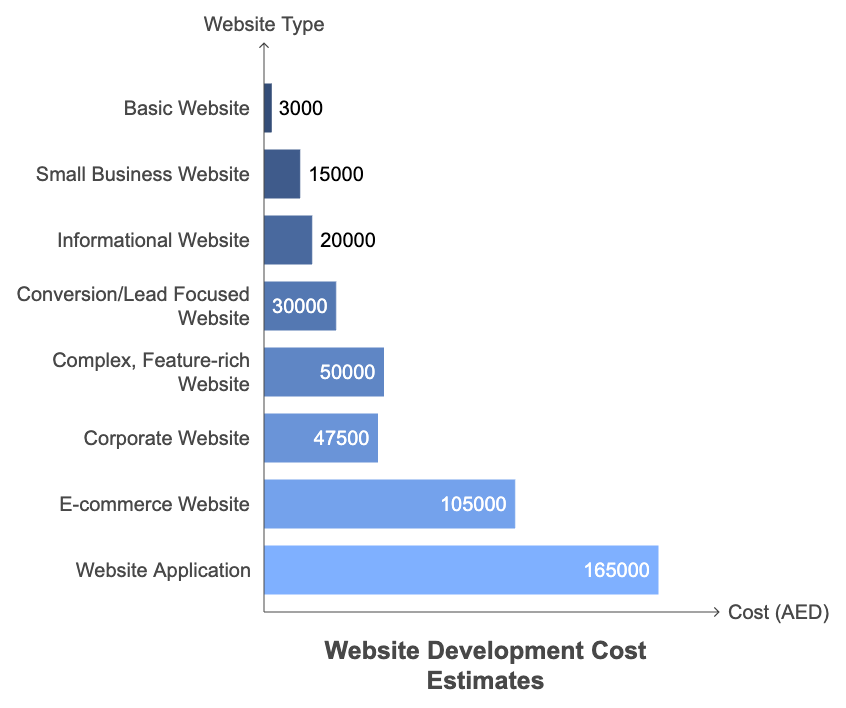
A visual comparison of website development costs based on different website types and complexity levels.
This cost breakdown reflects Dubai’s strong demand for high-quality digital products, international business presence. Users expect seamless UX, and compliance. For ecommerce business the pricing is justified as it is a long term investment. It reduces long-term risks and ensures the platform can scale alongside business growth.
Let’s consider some of the factors that influence the cost of an ecommerce website in Dubai and make ecommerce app development services premium but essential for business.
Key Factors That Influence Ecommerce Website Development Cost in Dubai
-
Type of Ecommerce Website
The structure and purpose of your ecommerce website play a major role in determining the cost. A simple ecommerce website that is designed for small business with limited products and basic functionality will cost significantly less than a large-scale enterprise platform. On the other hand, marketplaces, portals, and multi-vendor platforms require complex workflows, role-based access, and advanced backend systems, which increase development time and cost.
-
Design, UX, and Localization
Design is not just about visuals, it directly impacts conversions and brand credibility. Custom UI/UX design tailored to your brand and audience generally costs more than pre-built templates, but it delivers better engagement and usability. In Dubai, localization is another critical factor. Supporting both Arabic and English languages, accommodating right-to-left layouts, and aligning with regional user behavior adds additional development effort but is essential for market relevance.
-
Platform and Technology Selection
The choice of ecommerce platform significantly influences cost. SaaS platforms like Shopify allow faster launches with predictable pricing, while open-source solutions like WooCommerce and Magento offer greater flexibility at a higher development cost. Fully custom ecommerce solutions provide maximum scalability and control but require a larger upfront investment. The right choice depends on your business size, growth plans, and operational complexity.
-
Features and Functionalities
Core ecommerce features such as product catalogs, shopping carts, secure checkout, and payment processing are standard. However, advanced features like smart search, personalized recommendations, customer dashboards, bulk ordering, and advanced reporting increase both development effort and cost. When it comes to B2B business you need more functionality such as tiered pricing, quotation systems, and account-based purchasing.
-
Third-Party Integrations
Most ecommerce websites in Dubai require integrations with external systems, including ERP, CRM, accounting software, logistics providers, and local payment gateways. Each integration adds complexity and requires testing to ensure reliability and security. While these integrations increase upfront costs, they significantly improve operational efficiency and customer experience.
How Much Does It Cost to Develop an Ecommerce Website in Dubai? (2026 Update)
-
Basic Ecommerce Website Cost
A basic ecommerce website typically costs between AED 8,000 and AED 20,000. This option suits startups and small businesses that want to establish an online presence quickly. It usually includes a pre-built design, limited customization, essential ecommerce features, and standard payment gateway integration.
-
Mid-Level Ecommerce Website Cost
Mid-level ecommerce websites generally range from AED 25,000 to AED 60,000. These projects include custom design, enhanced UX, advanced integrations, and scalability options. This category is ideal for growing businesses that want a competitive edge and plan to expand product offerings or customer reach.
-
Enterprise and Marketplace Ecommerce Cost
Enterprise-level ecommerce platforms or marketplaces can cost AED 80,000 to AED 200,000 or more. These solutions are built for high traffic, complex workflows, and large product volumes. They often include custom architecture, performance optimization, advanced security, and extensive third-party integrations.
Hidden Ecommerce Website Costs
When it comes to ecommerce website development, you need to think beyond the basic cost. For a website, there is a different cost for maintenance, security updates, hosting, SSL certificates, plugin licenses, and performance optimization.
In fact, industry data shows that annual maintenance typically amounts to 15–25% of the initial development cost. For that, it is important to have transparent pricing before you begin the development process.
Choosing the Right Ecommerce Development Partner
Selecting the right partner is critical to e-commerce success. Look for proven experience, industry-specific case studies, transparent pricing, and strong post-launch support. A reliable partner doesn’t just build a website; they help align technology with business objectives and future growth.
1. Choose a Partner with Proven Experience and Domain Expertise
Don’t fall for just word of mouth. Look for web development agencies that specialize in ecommerce. Check the proven track record, timely delivery, ecommerce projects similar to your business model. Get a review of case studies, client testimonials, and live project examples to evaluate how well they handle real-world ecommerce challenges.
2. Strong Grasp Over the Local UAE and Dubai Market
Local market knowledge is a major advantage. An ecommerce development partner that is familiar with Dubai and the UAE will understand regional customer behavior, bilingual (Arabic and English) requirements, tax regulations, and preferred payment methods.
- Technical Expertise and Platform Specialization
Your partner should have expertise in ecommerce platforms and technologies. Make sure the technologies they are picking are best suited to your goals, whether that’s Shopify, WooCommerce, Magento, or a custom development process.
4. Clear and Transparent Pricing
No hidden cost is the major positive sign you must look for. Transparency in pricing is non-negotiable. Start looking for an ecommerce website development company that offers competitive yet transparent pricing.
5. UX/UI and Conversion-Focused Design Approach
A good ecommerce website is not just functional, but optimized for conversion. Your development partner must prioritize user experience, intuitive navigation, and performance across devices. Inquire about the UX/UI process and how they incorporate user behavior insights into design decisions.
7. Post-Launch Support and Maintenance
The development job is not over once it’s delivered. Post launch support, security updates, performance monitoring, and feature enhancements are essential for long-term success. Make sure your partner offers reliable post-launch support and clearly defines the credibility of a development agency.
Sum Up
So, now that you know how much does it cost to develop a website in Dubai? You need to understand your requirements first. From business needs, platform choice, and growth strategy, you must have a development plan before you dive in.
The development cost might be higher than some regions, it reflects quality, scalability, and market expertise that can drive long-term ROI.
For businesses serious about ecommerce growth in the UAE, investing in the right development approach is a strategic decision, not just a technical one.
FAQs
How much does an ecommerce website cost in Dubai?
Costs range from AED 8,000 for basic websites to over AED 200,000 for enterprise platforms.
Is website development in Dubai more expensive than other UAE emirates?
How long does ecommerce website development take?
Can ecommerce development costs be optimized?
Is ecommerce a worthwhile investment in Dubai?


