


A Complete Guide to Mobile App Development in 2026: Process, Cost, and Trends
How much time do you spend on mobile apps each day?
According to TechCrunch, mobile users now spend 4 to 5 hours per day in apps. We use apps to stream videos, order food, and manage money. There is an app for almost everything.
But users do not engage with every app they download. To stand out, your app must offer real value, great UX, and reliable performance. That takes more than a good idea. You need a clear roadmap, a realistic budget, and a strategy built around user needs.
This mobile app development guide walks you through the process, costs, technologies, and trends you need to know.
Key Takeaways
- Apps need a plan, not just an idea. Validate the idea and research the market before building.
- Follow a 7-step process. Research, requirements, design, development, testing, launch, and maintenance.
- Apps deliver clear business value. Direct customer contact, higher engagement, better data, and new revenue streams.
- Technology choice shapes cost. Native apps cost AED 150,000 to 400,000 per platform, while cross-platform apps cost AED 120,000 to 300,000.
- Five factors drive the budget. Complexity, design, platform, backend and integrations, and team location.
- Local partners add value. A Dubai team understands the market, regulations, and time zone.
- Watch the trends. AI, 5G, wearables, voice and chatbots, and stronger security are shaping apps in 2026.
What is Mobile App Development?
Mobile app development is the process of designing, building, testing, and launching apps for smartphones and tablets. Apps are either pre-installed or downloaded from the App Store or Google Play.
Users increasingly choose apps over mobile websites because they are faster, more personalized, and work offline. That is why more businesses are investing in apps, often with the help of a professional mobile app development company that understands the technology and trends.
How to Develop a Mobile App: 7-Step Process
Step 1: Idea Validation and Market Research
Remember, you are building for real users. Identify the problem your app solves and how it beats competitors:
- Run surveys, interviews, and competitor analysis.
- Find market gaps your app can fill.
- Create a clear unique value proposition.
Step 2: Define Goals and Requirements
Set clear business and technical requirements by answering:
- What features will it have? Push notifications, personalization, and social login are common examples. See the 10 essential features of a UAE business app.
- Which platform? Choose iOS, Android, or cross-platform.
- What are your timeline and budget? Clear limits keep the project on track.
Step 3: Wireframing and UI/UX Design
- Create low-fidelity wireframes.
- Map user journeys and interactions.
- Focus on accessibility, simple navigation, and clarity.
Step 4: Development
- Choose the approach: native, hybrid, or cross-platform.
- Build the front end (interface and client-side features).
- Build the backend (databases, APIs, and server integration).
Step 5: Testing and QA
- Functional testing: Does every feature work?
- Usability testing: Is the app easy to use?
- Security testing: Is user data protected?
- Performance testing: Does it hold up under heavy use?
Step 6: Deployment and Launch
- Set up the store listing (name, description, and visuals).
- Follow App Store and Google Play guidelines.
- Plan your launch marketing.
Step 7: Post-Launch Maintenance and Updates
- Analyze user feedback.
- Release regular updates.
- Fix bugs and add new features.
“The best way to predict the future is to invent it.”
Alan Kay, Computer Scientist
Have an App Idea? Let's Validate It Together.
Our Dubai team can help you plan features, choose the right platform, and estimate cost.
Get a Free Consultation5 Benefits of Building a Mobile App
1. Direct Link with Customers
Push notifications, alerts, and in-app updates reach users instantly, whether you are announcing a product or sharing a limited-time discount.
2. Better Customer Engagement
Users can browse, buy, and get support in a few taps. Live chat, AI chatbots, personalized recommendations, and rewards increase satisfaction and loyalty.
3. Data-Driven Insights
Apps track every interaction. Analytics show preferences and buying patterns, so you can improve campaigns and fix weak points, such as a step where users abandon their cart.
4. More Revenue Opportunities
Apps support in-app purchases, subscriptions, premium features, and ads. According to Statista, global mobile app revenue passed $400 billion in 2024. Ecommerce apps also act as a direct sales channel.
5. Stronger Brand Recognition and Trust
Your app keeps your brand on the customer’s home screen. Consistent branding and smooth performance build recall, word of mouth, and loyalty.
Mobile App Development Cost by Technology
| Type of App Development | Key Features | Pros | Estimated Cost (AED) |
| Native | Built separately for iOS or Android | Best performance and smoothest UX | 150,000 to 400,000 per platform |
| Hybrid | One codebase using web technologies | Cost-effective, faster launch | 100,000 to 250,000 |
| Cross-Platform | Built with Flutter or React Native | Near-native performance, single codebase | 120,000 to 300,000 |
For a full breakdown with timelines, read how to estimate mobile app development cost and timeline in the UAE.
5 Factors That Influence Mobile App Development Cost
1. App Complexity and Features
- Basic apps (calculator, to-do list): lowest cost and shortest timeline.
- Moderate apps (ecommerce, booking): user accounts, APIs, and admin panels.
- Complex apps (ride-hailing, social, fintech): real-time data, many integrations, and strong security. Examples include food delivery and on-demand apps.
2. Design and User Experience
Template designs are cheaper. Custom UI/UX, animations, gesture navigation, micro-interactions, and AR/VR add time and cost but improve retention.
3. Platform Choice
- iOS only: Can cost slightly more due to Apple’s strict design and review standards.
- Android only: Larger global user base but needs more device testing.
- Both platforms (native): Wider reach but nearly doubles cost and time. Cross-platform development reduces this.
4. Backend Infrastructure and Integrations
Servers, databases, cloud storage, and APIs power your app. Third-party integrations like Stripe, Google Maps, or a CRM add setup and testing time.
5. Developer Location
Developers in the US, UK, or UAE charge higher rates but offer better market and time zone alignment. Teams in Eastern Europe, South Asia, or Latin America cost less if well managed. Read how to find the best outsourcing company for mobile app development. For lower budgets, consider white label app development.
Why Choose a Local Mobile App Development Company?
If your business is in Dubai, a local team offers clear advantages:
- Market expertise: Local teams understand UAE users, regulations, and competition.
- Innovation: Good partners use the latest technology to build fast, modern apps.
- Quality standards: Professional teams follow international best practices for security, scalability, and performance.
- Communication: Same time zone means faster turnaround and easier collaboration.
“Software is eating the world.”
Marc Andreessen, Co-founder of Andreessen Horowitz
Mobile App Development Trends to Watch in 2026
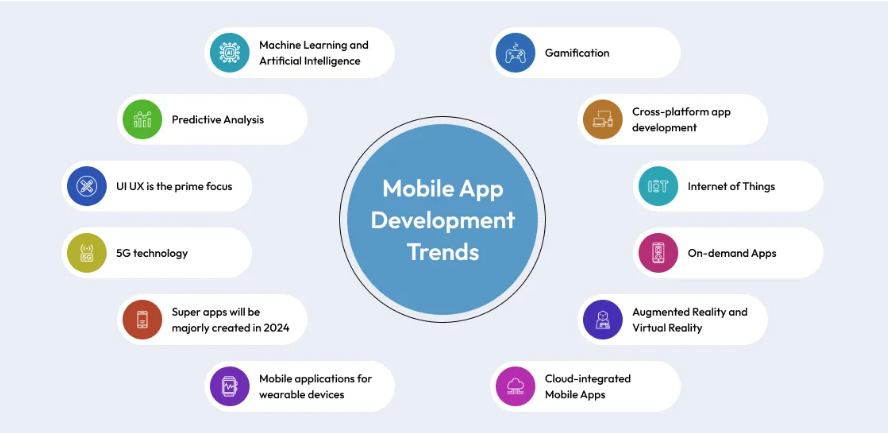
1. AI and Machine Learning
AI analyzes user behavior to deliver tailored content, smart recommendations, and predictive features, from streaming suggestions to adaptive fitness plans.
2. 5G Optimization
5G’s low latency and much faster speeds enable real-time features like AR/VR, cloud gaming, live video editing, and instant streaming.
3. Wearable Apps
Smartwatches, fitness bands, and AR glasses are pushing apps onto smaller screens, especially in healthcare, sports, and productivity.
4. Voice Search and Chatbots
Users expect fast voice search through Siri, Alexa, and Google Assistant. AI chatbots provide 24/7 support and can even complete transactions.
5. Stronger App Security
With apps handling health and banking data, security is a top priority. Expect end-to-end encryption, biometric login, two-factor authentication, and real-time threat detection, plus compliance with laws like GDPR, CCPA, and the UAE PDPL.
Conclusion
Successful apps come from a solid process, a realistic budget, and awareness of current trends. If you are launching in the UAE, a Dubai-based team adds local insight, quality development, and strategic support. Browse our work to see what we have built.
Ready to Start Your App?
From idea to launch and beyond, our Dubai team builds iOS, Android, and cross-platform apps.
Get a Free ConsultationFAQs
How long does it take to develop a mobile app?
A simple app takes 2 to 4 months, while a complex app can take 6 to 12 months or more.
Should I build for iOS or Android first?
How much does mobile app development cost in the UAE?
Can I update my app after launch?
What makes a mobile app successful?
Do app development companies offer post-launch support?


